




If your truck will spend most days on pavement and occasionally take a gravel driveway or unpaved road, the 2026 Chevy Colorado Z71 is a sensible place to start. If you regularly drive over ruts, uneven property entrances, or rougher trails, the Trail Boss gives you a factory-installed 2-inch lift. Both trucks have four-wheel drive and all-terrain tires. The choice comes down to the terrain you actually encounter and the features you want to use every day. What do these Colorado trims have in common? The Trail Boss and Z71 share the 2.7L TurboMax engine, rated at 310 horsepower and 430 lb.-ft. of torque. Both come with four-wheel drive, 18-inch wheels with 32-inch all-terrain tires, four selectable drive modes, and an off-road performance display. Both also have a two-speed transfer case with a shield. The Z71 has the equipment for trips to a campsite or travel along a gravel road. Both also give you the Colorado’s standard 11.3-inch center touch-screen and 11-inch digital Driver Information Center. If you’re comparing the wider range of 2026 Chevrolet Colorado features, start with what the two trims share. That makes the differences easier to judge. When does the Trail Boss lift make sense? The Trail Boss stands out for its 2-inch factory-installed lift and wider chassis. That extra height is worth considering if your regular routes include deeper ruts, uneven ground, or changes in grade where clearance matters. Its taller stance is the meaningful hardware difference for shoppers comparing these two trims. Picture how you use your truck around Brookhaven. An occasional graded gravel driveway is a different demand from repeated trips down a washed-out property road. If the rougher route is part of your normal week, the Trail Boss gives you its taller stance from the factory. If you seldom face that kind of ground, the lift may matter more to you for its appearance than its utility. That taller stance is also something to try in person. Step into the cab, load a few items in the bed, and think about who will ride with you. A feature that helps on uneven ground should still fit your daily routine. Where does the Z71 fit into everyday driving? The Z71 offers the same core engine output, standard four-wheel drive, and all-terrain tire size without the Trail Boss’s factory lift. It suits a driver who wants a Colorado for occasional unpaved travel while placing more weight on the cabin and lighting details used throughout the week. Chevrolet gives the Z71 a Jet Black interior with Adrenaline Red accents, plus LED headlamps, taillamps, and fog lamps. Those are differences you’ll notice whether you’re driving home after dark or simply prefer the Z71’s look. The less elevated stance may also be easier for some passengers to get into; a test drive in each truck is the way to decide how they feel to you. Compare equipment on the actual trucks Trim names tell only part of the story. Both Trail Boss and Z71 offer available 20-inch wheels in addition to their listed 18-inch all-terrain setups. Comfort and convenience equipment can also vary by package. If heated front seats, remote start, wireless phone charging, or a particular tailgate feature matters to you, check the window sticker on each truck before deciding. The same goes for towing equipment. Look at the individual truck’s trailering package and rated capacity rather than assuming one trim automatically handles more. That matters if your Colorado will pull a utility trailer or carry gear for weekend plans. How to choose for Brookhaven Driving Mostly paved roads, with occasional gravel: Start with the Z71. It already has four-wheel drive and all-terrain tires, along with its distinctive interior and LED lighting. Frequent rough access roads or uneven trails: Start with the Trail Boss. Its factory lift is the clearest reason to choose it over the Z71. A mix of both: Compare the exact vehicles available, especially their comfort packages, wheels, and trailering equipment. Then drive them back to back.
Slow Start or Dead Battery? Signs Your Chevy Needs a Battery Test
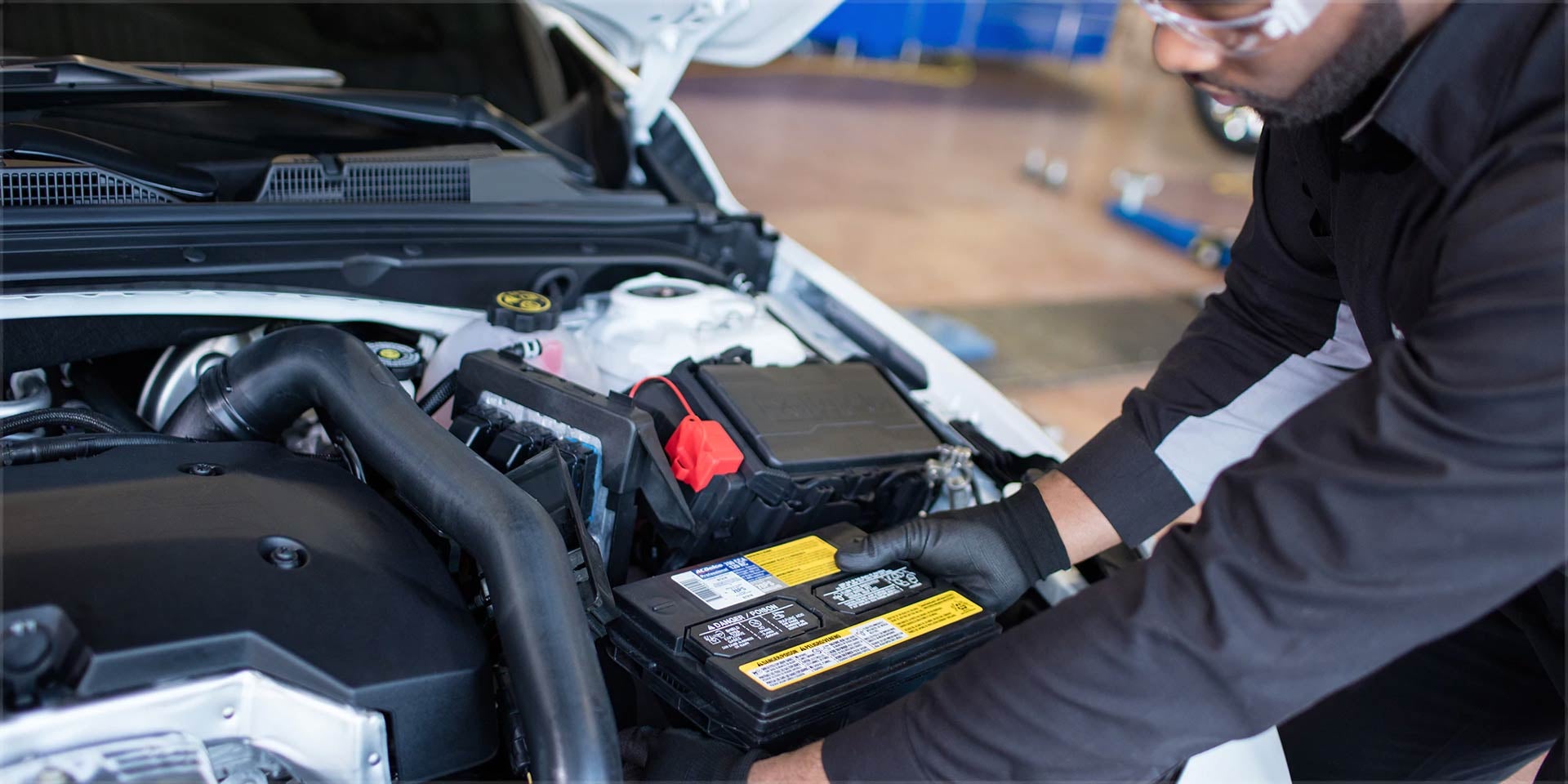
Chevy battery warning signs often include a slow crank, repeated jump-starts, or dim lights. These symptoms may point to a weak 12-volt battery, but they can also come from the charging system, starter, or battery connections. A battery test gives you a clearer starting point and helps identify the next check your vehicle needs. Your engine turns over more slowly than usual When you start your Chevy, listen to how quickly the engine cranks. A slower or hesitant crank may mean the battery is struggling to supply enough power. You might hear a series of clicks instead of the engine turning over at all. One slow start does not establish that the battery has failed. You may have left a light on, or a loose connection may be limiting power to the starter. Batteries can also fail with little advance warning. If the slow starts happen again, have the battery and starting system checked. A jump-start works, but the problem comes back A jump-start may get you moving, but it does not explain why the battery lost its charge. If your Chevy needs another jump after you’ve driven it, the battery may no longer hold a charge. The alternator may also be failing to recharge it. Loose cables or an electrical draw while the vehicle is parked are other possibilities. Pay attention to the pattern. Does the truck start after a jump but struggle the next morning? Does it fail after a short stop? Those details help a technician narrow down the problem. Repeated jump-starts are a reason to arrange an inspection before your next trip depends on the vehicle starting. Lights and electrical features seem unreliable Dim lights during starting or electronics that reset unexpectedly can be signs of low voltage. An illuminated charging-system warning light needs particular attention. The battery-shaped symbol may appear briefly when you turn the vehicle on. If it stays on after the engine starts or comes on while driving, Chevrolet advises having the electrical system serviced. Continuing to drive with the light on can drain the 12-volt battery. That warning light does not automatically mean you need a new battery. It tells you the charging system or another electrical component needs to be checked. If it appears while you’re driving, arrange service promptly and avoid unnecessary electrical use on any short drive to a safe location. What can a battery test tell you? A battery test helps assess the battery’s condition and its ability to provide starting power. At Stan King GM SuperStore Chevrolet, Certified Service technicians can perform a conductance test and check the battery and starting system. The result helps them determine whether the battery needs attention or replacement. The battery test is one part of the diagnosis. A battery can test low because it is worn out, but it can also be discharged by a charging problem. If the battery tests well and your Chevy still struggles to start, the technician can investigate connections, the starter, charging performance, or an electrical draw as appropriate. That is why the symptoms you describe matter alongside the test result. Request battery service in Brookhaven, MS If you have noticed these Chevy battery warning signs, review Stan King’s Chevrolet battery services and request a service appointment. Let the team know about any recent jump-starts, slow starts, or warning lights when you book. Your Chevy can also receive a battery check before it leaves you stranded. Stan King recommends asking for a conductance test when you come in for an oil change. Whether the result points to the battery or another part of the starting and charging system, you will have a clearer next step.